Will an unlocked or imported phone work on my carrier?
Bands, carrier approval, IMEI checks, warranty, update promises and rugged-phone claims: what to check before buying an unlocked or imported phone.
Updated 2026-11-27
"Unlocked" only means the phone isn't tied to one carrier. It doesn't mean every carrier will accept it, or that calls, 5G and Wi-Fi calling will all work. Imported phones from brands that don't sell through US carriers are the riskiest, because nobody has checked them against your network for you. This guide covers what to check, in order.
1. The phone must be unlocked and not blocked
Both big carriers say this first. Verizon's bring-your-own-device page says the phone must be unlocked and its hardware and software compatible with Verizon's network, and warns that a locked phone works only on its original carrier. AT&T's BYOD support article adds that a dual-SIM phone needs both SIM slots unlocked, and that the phone must not be reported lost, stolen or involved in fraud. A new phone bought unlocked from a retailer clears this step. A used phone may not.
2. Bands: necessary, but not enough
Every phone supports a fixed list of LTE and 5G frequency bands, and every carrier uses its own set. If the phone lacks the bands your carrier relies on where you live, you'll get weak or no signal no matter what else is right. AT&T's business support page names the 4G LTE frequencies a phone must work on (AWS, 700, 850 and 1900 MHz) and says to confirm frequency support on the maker's website.
A phone designed mainly for other markets may not include every band a US carrier uses. Compare the phone's full band list (on the maker's spec page, not a reseller's summary) with your carrier's before you buy.
Matching bands is still not a guarantee. AT&T's how-to page says a phone must be GSM-compatible and on AT&T's list of tested and approved devices. Verizon describes its HD Voice calling as a set of services enabled by VoLTE (voice over LTE), and lists "phone not on the 4G LTE network" among the reasons those calls fail. So a phone has to be both technically able and accepted by the carrier.
3. Run the carrier's IMEI check
The only reliable answer comes from your carrier's own checker, which needs the phone's IMEI (its unique ID). AT&T says you can find the IMEI by dialling *#06#; Verizon says it's in the phone's About settings and runs its check on the BYOD page. On another carrier, use its own bring-your-own-phone page.
The catch with an imported phone: you usually only get the IMEI once the phone is in your hand. So:
- buy from a seller with a clear return policy, and run the check the day it arrives;
- don't cancel your current service until the new line is working (both Verizon and AT&T warn about this);
- test a real voice call, texts, mobile data and, if you use it, Wi-Fi calling before the return window closes.
4. Warranty and support for imported phones
A phone sold in the US by the maker or a carrier comes with US support and repair channels. An imported phone's warranty may be handled only by the seller or by the maker's overseas service, which can mean shipping it abroad. Before buying, find out who handles warranty claims, how long it lasts and who pays postage. Also check what the warranty excludes: even Apple, which rates recent iPhones IP68, says liquid damage isn't covered by its warranty.
5. Software updates: look for a written promise
A phone's security depends on updates. Some makers publish a fixed promise; Google, for example, gives Pixel 8 and later 7 years of OS and security updates from when the model first went on sale on the US Google Store. Many budget and rugged brands publish no update period at all. If you can't find a written promise, assume the phone may stay on the Android version it ships with, and weigh that against the price.
6. Rugged phones: read IP68 and MIL-STD claims carefully
Rugged phones usually advertise an IP rating and "MIL-STD-810" testing.
- IP68 comes from IEC 60529, but the depth and time behind the 8 are set by the maker. Apple, for instance, states 6 m for 30 minutes for recent iPhones and says resistance can decrease with normal wear. A rugged listing that gives no depth or time is telling you less than it seems.
- MIL-STD-810 is a US military environmental standard. NASA's standards listing describes it as a process for tailoring tests to the conditions equipment will face, not a fixed set of design or test specifications. So "MIL-STD-810H" on its own doesn't tell you which drops, temperatures or vibrations were tested, or by whom. Look for the specific test methods and conditions; if they aren't published, treat the claim as marketing.
Quick decision guide
- You need a phone that just works for calls on a major carrier: buy a model the carrier lists, or a mainstream unlocked phone sold in the US.
- You want a cheap rugged or big-battery phone and can tinker: an imported phone can be fine, if the bands match, the carrier accepts the IMEI and you can return it.
- You only need it on Wi-Fi (a tablet, a kids' device, a work-site camera): carrier compatibility mostly stops mattering.
Picks from our phones and tablets section
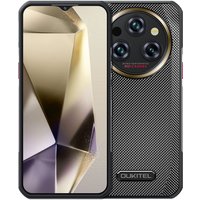
These are imported models sold by Geekbuying. Check your carrier first: claims below come from the product titles only, so confirm the band list on the maker's page and run the IMEI check on arrival.


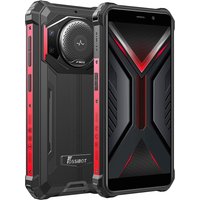

More rugged phones and tablets in our catalogue, from FOSSiBOT, BMAX and other brands:


Related: How to choose a smartwatch · Secure your smart home network